

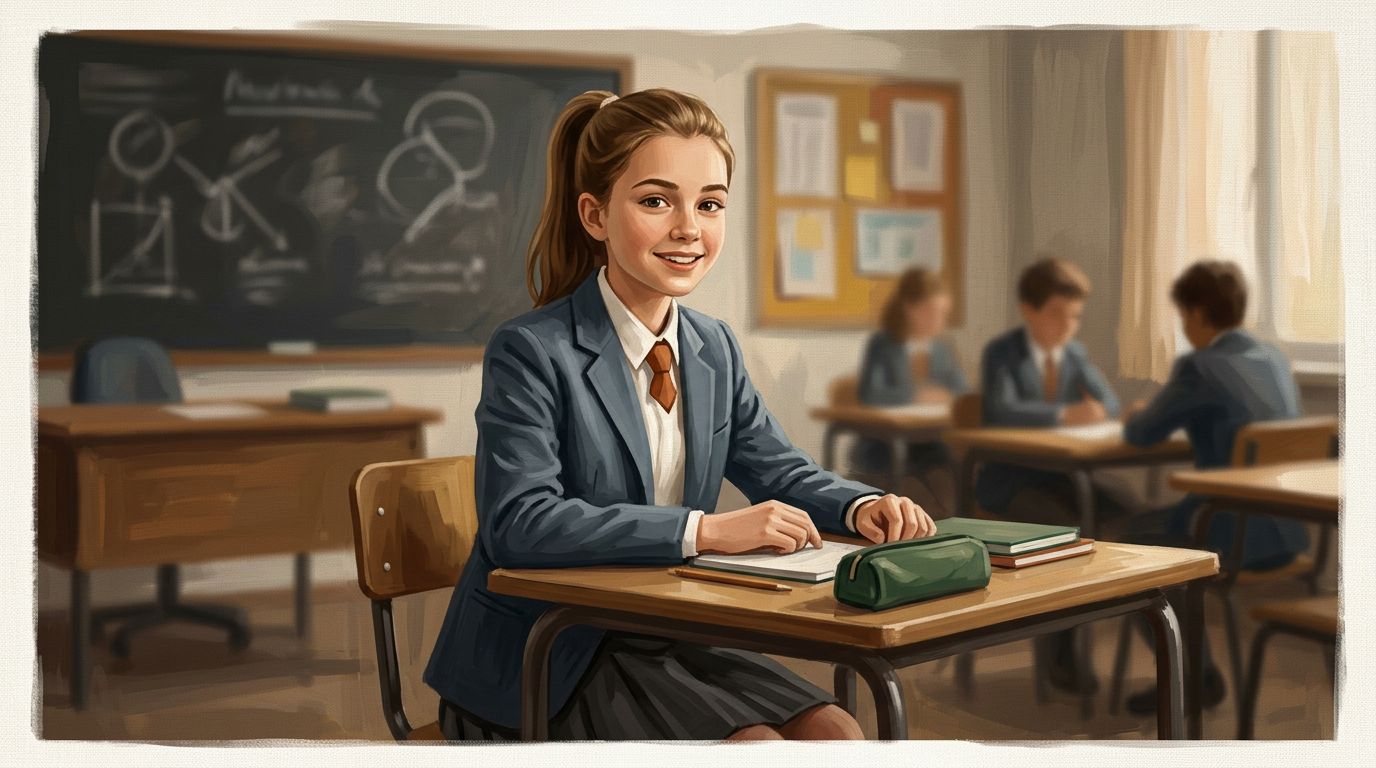
Puberty is demanding for almost every young person. But for many internalising AuDHD girls, it can be the point where coping strategies that “worked” in childhood stop working and the cost of masking becomes impossible to hide. Adults may still see a girl who is polite, helpful, high-achieving, or “fine,” while she experiences escalating anxiety, fatigue, sensory overwhelm, school distress, and a shrinking sense of self.
This blog explains why puberty can hit internalising AuDHD girls so hard, why relationship-forming can become a particular vulnerability, and what families, schools, and clinicians can do to reduce risk and support wellbeing.
What makes AuDHD different (and why it matters in puberty)
Autism and ADHD are different neurodevelopmental profiles but they often co-occur. When both are present, they can amplify each other:
- ADHD can increase emotional intensity, distractibility, impulsivity, and overwhelm speed.
- Autism can increase sensory load, need for predictability, and social processing demands.
- Together, they often create high sensitivity + high cognitive load + high effort cost, especially in environments built for constant multitasking and social performance.
Why puberty is a “perfect storm” for internalising AuDHD girls
1) Puberty is a nervous-system transition, not just a body transition
Puberty brings rapid changes in body sensation, sleep rhythms, appetite, pain sensitivity, and emotional intensity. For many autistic people, sensory processing differences mean those new sensations can feel physically and emotionally overwhelming: breast development, body odour changes, sweating, discharge, cramps, acne pain, temperature shifts, and clothing discomfort can all become major stressors.
ADHD can add volatility: sleep disruptions, motivation swings, and rapid shifts in focus or mood can become harder to manage when the body is changing quickly.
2) Hormonal shifts can change regulation and coping
Many girls notice that puberty (and later menstrual cycling) affects energy, mood, focus, and emotional regulation. Even when a teen has always “managed,” puberty can expose the limits of compensation. Internalisers often respond by trying harder, masking more, and burning out faster which looks like resilience until it suddenly looks like collapse.
3) Social demands explode and the “rules” become more hidden
Adolescence intensifies social complexity: group hierarchies, subtle exclusion, appearance norms, dating, and sexuality. Autistic girls may work very hard to decode shifting social expectations; ADHD can make it harder to slow down, reflect, and track social patterns over time. The result is often high social effort, low social rest.
4) Internalising + masking means adults miss the severity
When distress is externalised, it triggers attention. When distress is internalised, it can trigger praise (“so mature,” “so capable,” “never any trouble”). Internalising AuDHD girls may:
- over-comply at school, then collapse at home
- become perfectionistic and rigid (control reduces anxiety)
- withdraw socially without anyone noticing loneliness
- somaticise (headaches, nausea, fatigue)
- freeze (“task paralysis”) rather than refuse
- hide struggles because they fear disbelief
Puberty becomes a crisis point when everyone believes she’s coping right when she needs more support.
5) Executive function demands jump as sensory and emotional load rises
Puberty often coincides with increased workload, multiple teachers, longer days, and higher independence demands (“be responsible,” “manage your time,” “get organised”). ADHD traits can make planning, initiation, switching, and time sense harder especially under stress. Autism traits can make transitions and unpredictability harder. Together, the teen can look “lazy” when she is actually overloaded.
6) Identity development intensifies and “difference” can feel like defect
Adolescence brings big identity questions: Who am I? Where do I belong? If a girl has spent years believing “I’m failing at being normal,” puberty can intensify shame. Masking can become not just social strategy, but identity habit: she may not know what she genuinely likes, needs, or wants only what keeps her safe.
Why internalising AuDHD girls can be especially vulnerable in relationship-forming during puberty
Puberty is when many young people begin experimenting with belonging, intimacy, dating, sexuality, and social status. Internalising AuDHD girls can be at higher risk during this stage not because they are “naïve,” but because their nervous system profile, masking patterns, and social environment collide.
1) The social rulebook changes and gets more indirect
Adolescent relationships often run on implied norms: flirting, “reading between the lines,” mixed signals, and fast-moving social shifts. Autistic social communication differences can make hidden rules harder to decode; ADHD can make it harder to pause and reflect before responding. That can increase risk of:
- missing early warning signs of coercion, possessiveness, or control
- struggling to judge reciprocity vs exploitation
- taking promises literally or assuming others mean what they say
2) People-pleasing can override self-protection
Internalising AuDHD girls often learn that being agreeable reduces conflict. In relationships this can translate into:
- saying yes when they mean “maybe” or “no”
- going along to avoid disappointing someone
- hiding discomfort to preserve connection
- feeling responsible for others’ emotions
3) Rejection sensitivity can intensify “staying too long”
Many AuDHD teens feel rejection intensely. Small shifts (delayed replies, subtle exclusion) can trigger urgent repair behaviours: over-apologising, over-explaining, over-giving, or tolerating unhealthy dynamics because being alone feels worse. This is nervous-system threat response not drama.
4) Sensory/interoceptive differences can complicate consent cues
Some autistic people struggle to notice or interpret internal signals (discomfort, anxiety, pain) quickly especially under social pressure. A teen may freeze rather than speak, or only realise “I didn’t like that” afterwards. That’s why consent education must be explicit and rehearsed, not assumed.
5) Power dynamics and grooming risk (online and offline)
Loneliness, desire for belonging, literal interpretation, and fear of disbelief can increase vulnerability to people who offer intense attention, “special” connection, secrecy, or rules. Protective adults should treat relationship safety as a health priority, not a moral lecture.
What actually helps: support that reduces load, increases safety, and strengthens agency
1) Make the invisible visible: assess “cost,” not just competence
Shift the questions:
- “What does it cost her to do it?”
- “How long does she need to recover?”
- “Does she look fine at school and collapse at home?”
- “What triggers shutdown, tears, nausea, or exhaustion?”
For clinicians: screen routinely for masking, shutdown, sensory distress, sleep problems, and internalising anxiety/depression and ask directly about effort cost.
2) Puberty education that is concrete, sensory-aware, and early
Don’t assume she’ll “pick it up.” Teach explicitly:
- what periods are; what’s normal vs concerning
- step-by-step menstrual hygiene
- pain management plans (cramps, headaches)
- sensory planning (preferred products/textures; spare clothes; wipes; discreet disposal)
- scripts for asking to leave class or access supports
3) School supports that reduce cognitive and social load
Helpful accommodations often include:
- predictable routines and clear expectations
- written instructions and checklists
- reduced multitasking demands
- movement breaks and sensory supports
- access to a quiet space
- flexible deadlines during high-load weeks
- a “safe adult” check-in that is private and non-shaming
Goal: protect energy and prevent burnout, not enforce endurance.
4) Neurodivergence-informed mental health care
When therapy helps, it is usually:
- concrete, collaborative, and sensory-aware
- focused on shame reduction and self-compassion
- supportive of emotion identification (when alexithymia/interoception differences are present)
- attentive to burnout and shutdown patterns
- paired with safety planning when risk is present (self-harm/suicidality must be taken seriously)
5) Relationship safety as a taught skill (with scripts and practice)
Teach boundaries as a learnable skill, not a personality trait. Practise scripts:
- “I need time to think.”
- “Not today.”
- “I’m not comfortable with that.”
- “If you keep asking, I’m leaving.”
- “I don’t do secrets.”
- “I need to check with my adult.”
Teach green/yellow/red flags explicitly:
- Green: respect, consistency, repair, mutuality, no pressure
- Yellow: confusion, mixed signals, boundary-testing, intensity too fast
- Red: coercion, isolation, secrecy, threats, humiliation, control
Add a digital safety plan (privacy settings, screenshot reality, no-trouble rule for asking for help).
6) Reduce masking pressure by changing the environment
Masking decreases when it is safer to be authentic:
- allow movement/stimming
- respect sensory boundaries
- normalise direct communication
- avoid punishing shutdown
- teach adults that difference isn’t disrespect
7) Track patterns across the menstrual cycle
A simple 2–3 month tracker of sleep, mood, focus, sensory sensitivity, pain, and social tolerance can reveal predictable high-risk windows and guide planning at home and school.
Closing
Internalising AuDHD girls are often “high effort, high cost” adolescents: they work incredibly hard to look okay. Puberty raises sensory, social, executive, and relationship demands all at once — and if we only notice what’s visible, we will miss the girls who need support most.
The most protective actions are:
- recognise internal load early,
- reduce environmental and sensory stress,
- scaffold executive function and transitions,
- teach puberty and consent skills explicitly,
- provide neurodivergence-affirming mental health care, and
- strengthen belonging so unsafe relationships aren’t the only place connection is found.

