

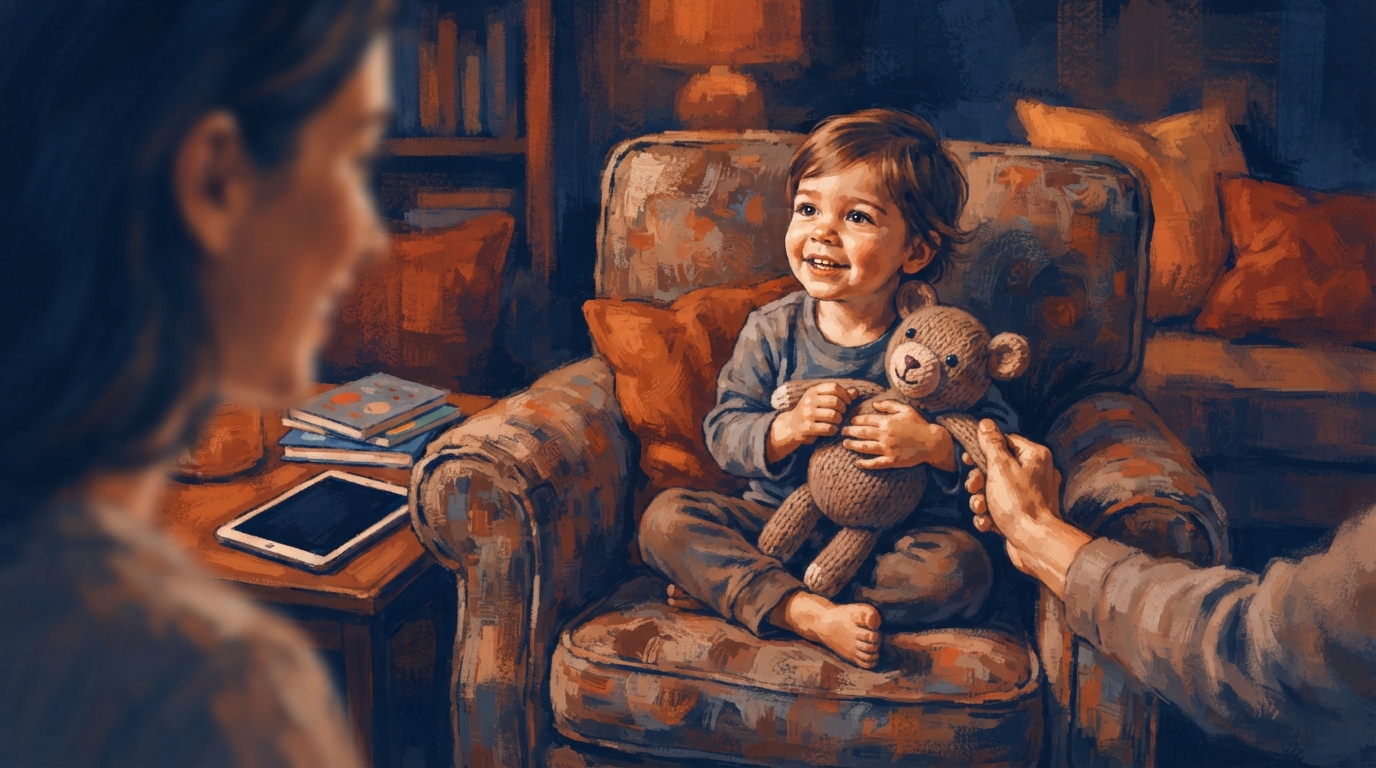
You’ve probably heard people say “screens are ruining kids’ development.” The truth? It’s not the screen itself – it’s what screen time replaces. Young children learn to talk through real-life back-and-forth interaction. When screens take up too much space, those moments get squeezed out.
Research shows that too much screen time is linked with:
- Fewer chances for your child to practise talking
- More distractibility or difficulty focusing
- Sleep struggles (which affects learning)
- Less play, less movement, and fewer social interactions
What do the experts recommend?
- Under 18–24 months: avoid screens, except video calls with family
- Ages 2–5: aim for about 1 hour per day of high-quality content
- Older kids: focus on balance – protect sleep, homework, and family time
I know reducing screens is hard. Giving our children screen time help us as adults cook, shower, survive grocery stores, and get a moment to breathe. This isn’t about guilt. It’s about small, realistic changes that protect your child’s communication.
Simple things you can start today
- Co-watch instead of solo-watch. Talk about what’s happening on the screen.
- Turn off background TV. It steals your child’s attention (and yours).
- Swap one screen session a day for reading, pretend play, or chatting during routines.
- Keep screens out of the hour before bedtime to support better sleep (and better learning).
Screens aren’t “bad,” but too much screen time in the early years can get in the way of the real-world interaction kids need to learn to talk. Make small tweaks, stay flexible, and focus on connection – not perfection.

