

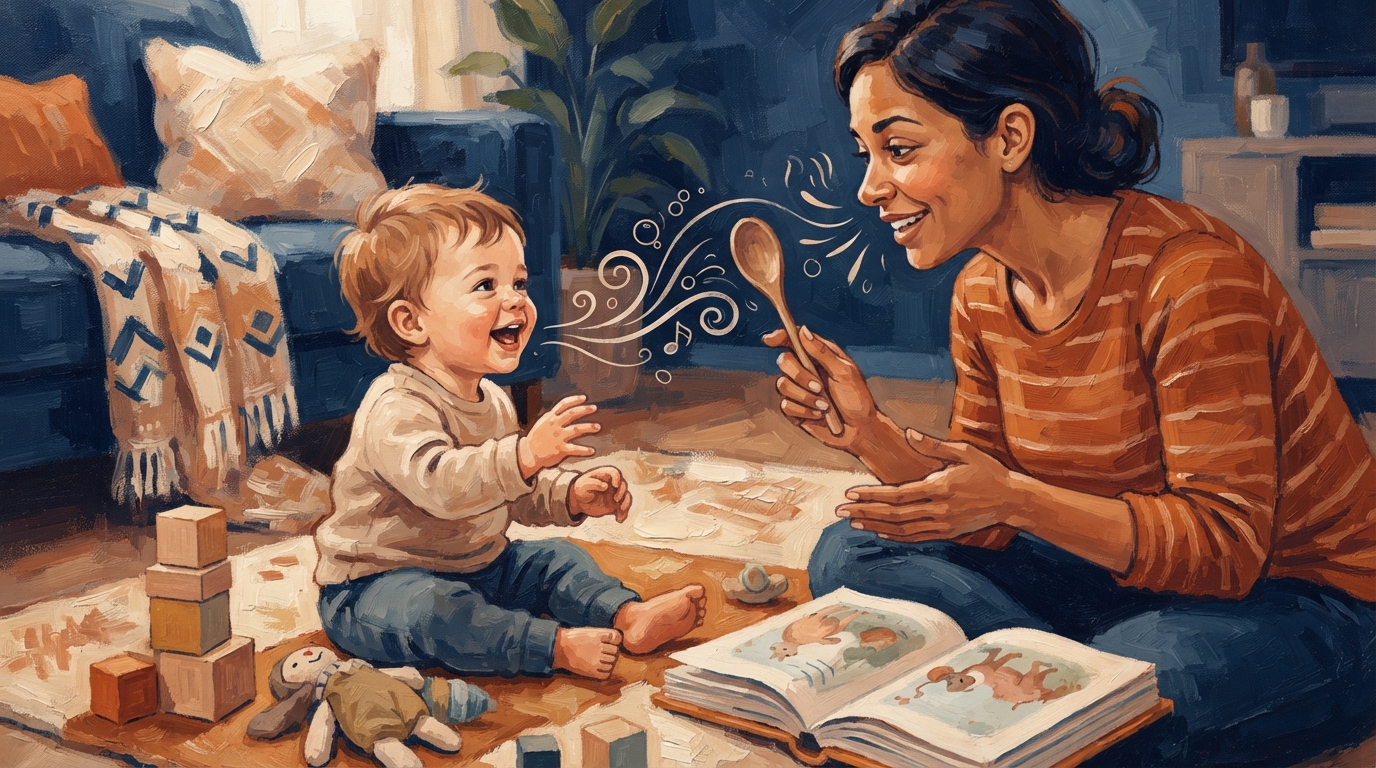
As parents, we’re always looking for ways to support our children’s growth and development. When it comes to speech and language, it might surprise you to learn that some of the most powerful tools are already right at your fingertips: everyday play!
But what kind of play truly makes a difference? And how does it change as your child grows from a cooing infant to a chatty school-aged kid? Let’s dive in, drawing on what the experts tell us, in simple terms.
The Power of Play: More Than Just Fun
Play isn’t just about entertainment; it’s a child’s natural way of learning about the world, themselves, and how to communicate. When children play, they’re experimenting with sounds, words, social rules, and understanding what others mean.
From birth to age six, your child’s brain is rapidly developing, building the foundations for complex language skills. And guess what? Play is the ultimate architect!
Ages 0-1: The World of Sounds and Early Connections
At this age, speech development is all about listening, babbling, and making connections with you.
What to do
- “Talk” to your baby: Respond to their coos and babbles as if they’re having a conversation. This is called “serve and return.” When they make a sound, you make one back!
- Sing songs and read books: Even if they don’t understand the words, the rhythm, intonation, and exposure to different sounds are crucial. Point to pictures and name them.
- Tummy time play: Get down on their level! Make funny faces, tickle them, and talk about what you’re doing. “Up goes the rattle!
Why it helps
Research shows that responding to a baby’s sounds encourages them to make more sounds, which are the building blocks of words. Early exposure to language through reading and singing also strengthens their listening skills and word recognition.
Ages 1-3: Words are Blooming!
This is often when those first magical words appear, and vocabulary explodes! Play here is about naming, describing, and simple instructions.
What to do
- Interactive games: “Peek-a-boo” and “Pat-a-cake” are fantastic. They involve repetition, anticipation, and often a key word or phrase.
- Parallel play with commentary: Play alongside your child and simply talk about what you are doing, and what they are doing. “You’re building a tall tower! I’m making a car go ‘vroom!'”
- Cause-and-effect toys: Push-button toys, shape sorters, and stacking cups offer opportunities to introduce words like “push,” “open,” “in,” “out,” “up,” “down.”
- Reading together: Point to objects and name them. Ask simple questions like, “Where’s the dog?”
Why it helps
Research highlights that responsive parenting – where parents engage and respond to their child’s interests during play – is strongly linked to faster language growth. Naming objects and actions provides the vocabulary children need to express themselves.
Ages 3-6: Storytelling and Social Talk
Now, play becomes more imaginative and social, perfect for practicing longer sentences, asking questions, and understanding different perspectives.
What to do
Pretend play/Dramatic play: Dress-up, playing “house,” “store,” “doctor,” or “superheroes.” This is gold for speech development! Children create narratives, take on roles, and negotiate with others, all requiring lots of language.
Why it helps
This age is crucial for developing pragmatics, which is the social use of language (knowing what to say and how to say it in different situations). Research supports that dramatic play provides a safe environment to practice complex sentence structures, understand character motivations, and develop sequencing skills. These are all foundations for successful conversation and later reading comprehension. The interaction and back-and-forth flow in games and pretend scenarios rapidly advance their social communication skills.
Open-ended Play
If you’ve ever watched a child ignore a brand-new, fancy toy to play with the cardboard box it came in, you’ve witnessed the power of open-ended play!
Open-ended toys are simply those that don’t have a specific purpose. There’s no right or wrong way to use them, which means they grow with your child from babyhood to the school years, fostering creativity, problem-solving, and, crucially, language development.
The truth is, you absolutely do not need a mountain of expensive toys to encourage this growth. Many of the best “toys” are found right in your home: a wooden spoon, a pillow, or a simple blanket can transform into anything their mind can imagine.
The most important element in all of this? You! The conversation and interaction you bring to any play session are the most vital ingredients for speech development.
Now, go play!

